Key Takeaways
- Bitcoin’s seven-day average hashrate reclaimed 1 ZH/s for the first time since March 3.
- More efficient mining hardware and smaller operators are helping offset the industry’s pivot toward AI.
- Falling hashprice and rising mining difficulty are squeezing miners’ profit margins despite the recovery.
Bitcoin Hashrate Reclaims 1 ZH/s as Mining Power Defies AI Pivot
While bitcoin’s price hovers near $80,000 per coin, miners have propelled the network’s hashrate beyond 1,000 exahash per second (EH/s), equivalent to 1 ZH/s. At press time, the network’s hashrate stands at 1,080.23 EH/s, or 1.08023 ZH/s, following its latest difficulty adjustment roughly nine days ago at block height 971712.
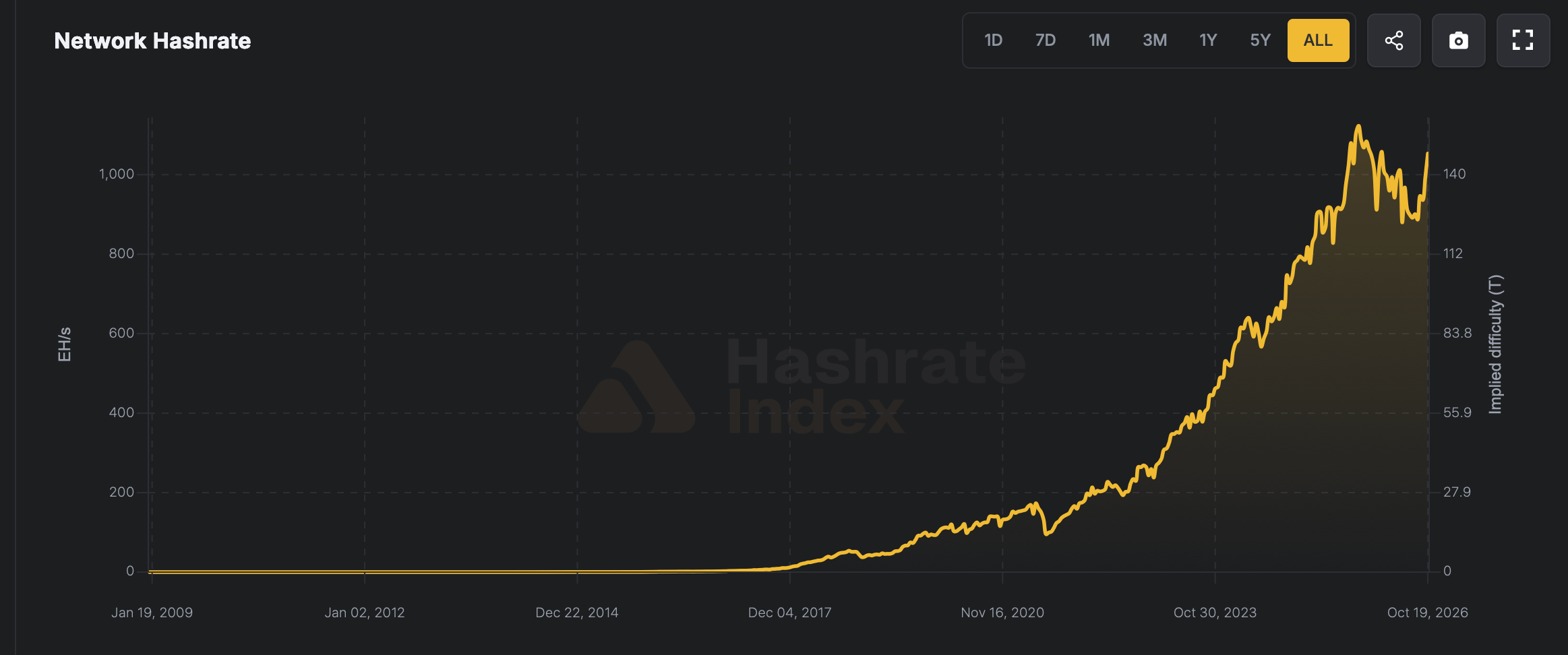
Moreover, the seven-day average recently reclaimed the 1 ZH/s threshold for the first time since March 3. Curiously, this resurgence comes as several major mining firms redirect equipment and capital toward artificial intelligence (AI) and other high-performance computing ventures. Meanwhile, smaller, solo, and privately held mining operations appear to be filling the void, sustaining Bitcoin’s expanding computational power.
Next-Generation Mining Hardware Seemingly Helped Offset AI Exodus
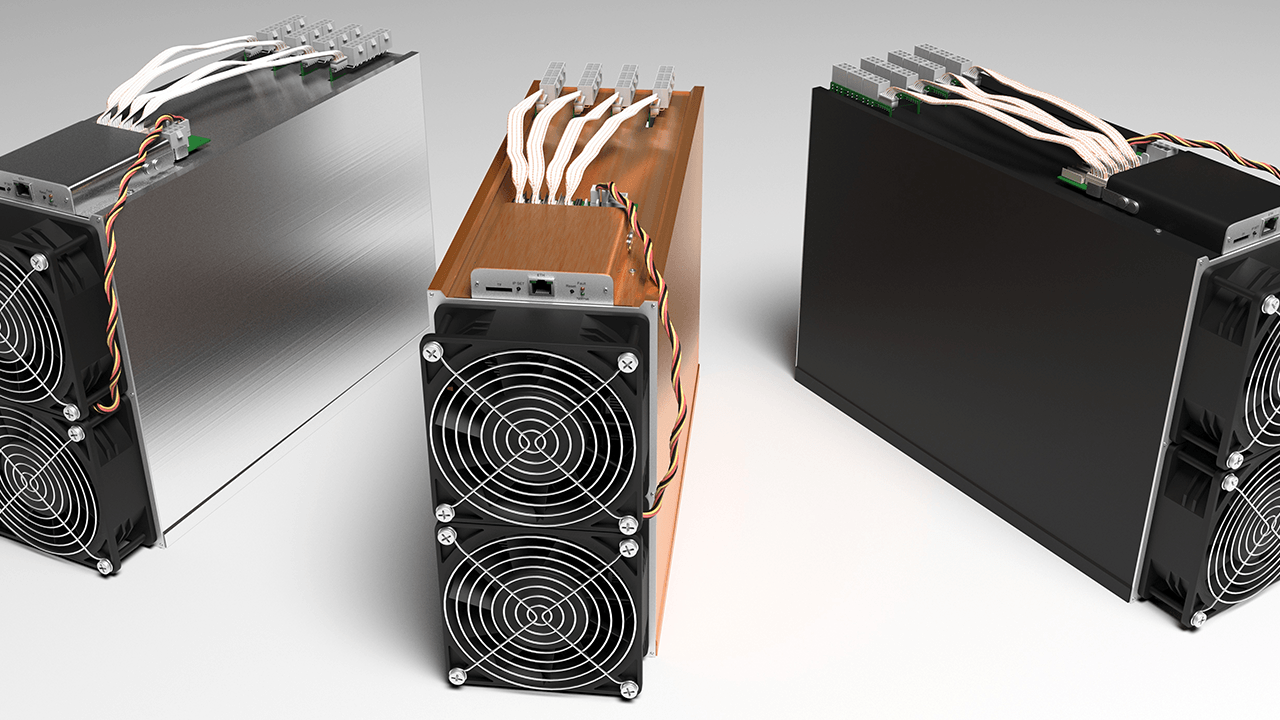
Despite the industry’s pivot toward AI, advances in bitcoin mining hardware over the past two years have delivered faster, more energy-efficient machines, providing miners with a valuable competitive buffer. Today’s most advanced Bitcoin mining rigs can execute hundreds of trillions of calculations per second. Some models now surpass 1 petahash per second (PH/s), equivalent to 1,000 terahash per second (TH/s).
Mining efficiency is measured in joules per terahash (J/TH), a metric that reveals how much energy a machine consumes to perform a given amount of computational work. In simple terms, the lower the figure, the less electricity required to deliver the same hashing output. Several next-generation machines manufactured by companies such as Bitmain and MicroBT now operate below 10 J/TH, offering a substantial economic advantage over their aging predecessors.
Falling Hashprice and Rising Difficulty Will Test Miners’ Profit Margins
Although Bitcoin’s hashrate has reclaimed the 1 ZH/s threshold, it remains below its previous peaks of approximately 1.3 to 1.44 ZH/s, despite recovering substantially from July’s low near 726 exahash per second (EH/s). Several headwinds could still constrain the network’s computational expansion, with BTC’s market price representing the most consequential variable. Bitcoin’s U.S. dollar valuation has declined over the past 30 days, placing additional downward pressure on hashprice.
Hashprice measures mining revenue by calculating the market value of a given amount of computational power over a 24-hour period. Currently, hashprice stands at $36.04 per petahash per second (PH/s) per day, down from $40.42 on Sept. 25, 2026, according to hashrateindex.com stats. Compounding that pressure, mining difficulty climbed another 5.92% during the latest adjustment. Nevertheless, miners have maintained their momentum, with blocks arriving at an average interval of 9 minutes and 31 seconds over the past 24 hours.
That accelerated pace suggests the next difficulty adjustment, expected Oct. 29, will likely bring another increase. Still, Bitcoin’s hashrate recovery suggests advances in hardware efficiency are more than compensating for the migration of capital and expertise, offering an encouraging indication of the network’s resilience.
Yet with hashprice declining and mining difficulty climbing, the smaller private operators filling the gap may be contending with considerably tighter profit margins than the headline hashrate figures suggest. Only time will tell.