Key Takeaways
- Response speed varied by more than a day across the 13 manufacturers.
- Open-source wallets leaned on verifiability to reassure users; closed-source wallets leaned on certifications and audits.
- Only a few wallets pushed multisig and other self-custody best practices as a structural defense.
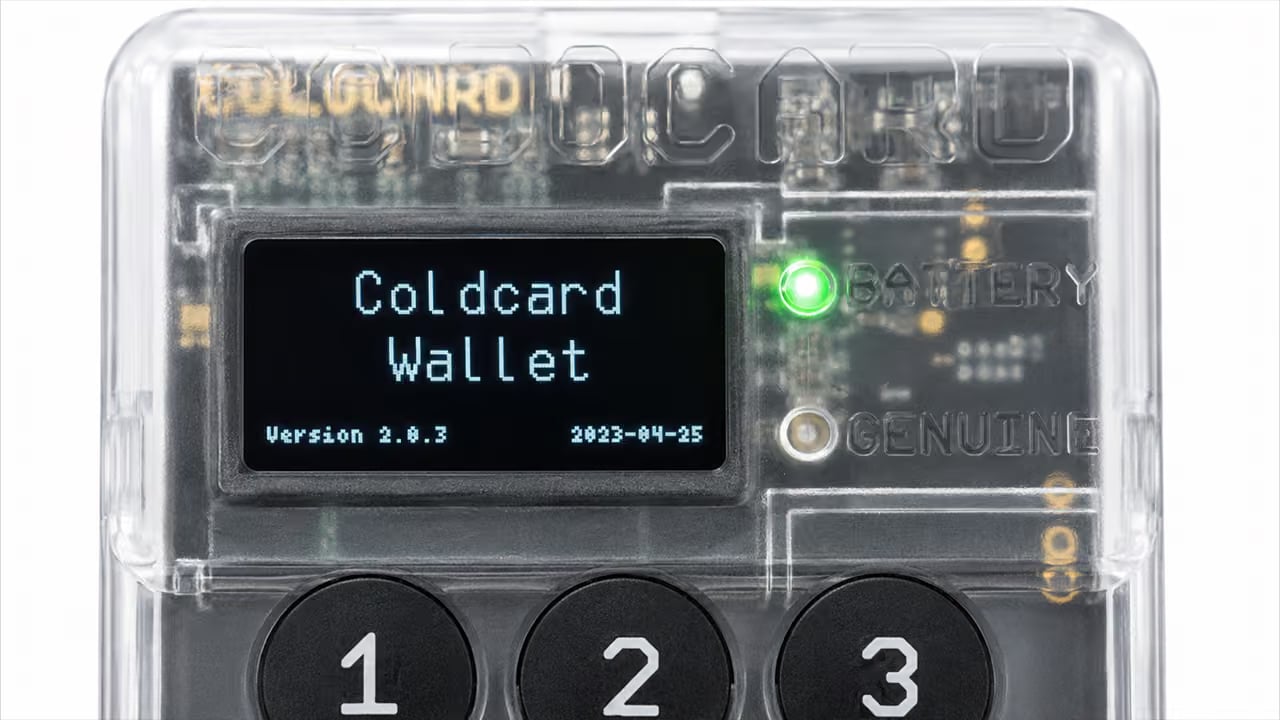
Bitcoin.com News looked into how the top 13 manufacturers of these crucial devices communicated on X, the main social media channel for all things crypto asset-related, since the crisis erupted at the end of July and into August.
SPEED AND CLARITY
Teams differed in speed, clarity, helpfulness, tone, bragging level, and whether they kept following up on the matter days and now, weeks later. For example, the manufacturer of Bitkey, U.S.-based Block, which was part of the initial Coldcard investigation, was among the first to warn its users and the broader community about the exploit, and was soon followed by Canada-based Blockstream, the manufacturer of Jade. Meanwhile, for some others, it took more than a day to post on X. One of the leaders of the industry, Europe-based Ledger, informed its followers on X after around 14 hours since the crisis erupted.
However, the fastest responders were not always the most thorough.
BROADER SELF-CUSTODY OPPORTUNITY
In either case, among the patterns that emerged across the wallets’ communication, there was a heavy emphasis on how entropy is generated, as teams were trying to differentiate themselves from Coldcard. Also, some teams highlighted support for user-generated entropy as a way to reduce trust in the device’s own random number generator (RNG).
There was also a different approach to how closed- and open-source device manufacturers have been trying to calm their users. Devices with stronger open-source credentials (Passport Prime, Trezor, Bitbox, Keystone, Blockstream Jade) leaned into verifiability, while more closed-source designs (Ledger, Tangem, Ngrave) leaned more on certifications and audits.
Additionally, not all teams discussed multisignature (multisig) setups as a structural defense, especially when it comes to multi-vendor setups, while several companies used the moment to push broader self-custody best practices in general.
HELPING AND BRAGGING
As for the follow-ups, Trezor, Bitkey, Bitbox, and Blockstream Jade stood out as more active ones, providing additional information, while Ledger, Tangem, Safepal, and Ngrave were relatively less active in that regard.
Also, not every team gave practical migration advice for affected users, and Foundation (the manufacturer of Passport Prime), Bitkey, Ellipal, Jade, Bitbox, and Trezor stood out for actionable guidance. Meanwhile, Foundation and Trezor also communicated about their additional security hardening measures. Ngrave and Ellipal seem to have used the strongest promotional language, such as “world’s safest,” “leader of air-gapped,” etc.
Now, let’s take a quick look at each of the wallets’ communications. They’re ranked by their first post on X during the crisis.
REACTIONS OF THE TOP 13 BITCOIN HARDWARE WALLETS TO THE COLDCARD CRISIS
Bitkey
July 30, 10:07 PM EDT
Bitkey and its manufacturer, Block, took a proactive early role in the Coldcard crisis, as Block’s team independently investigated the thefts and published a detailed technical analysis confirming that the seedless Bitkey wallet wasn’t affected. Besides clear explanations in plain language and warnings that vulnerable Coldcard seeds remain compromised even if moved elsewhere, the team also advised against rushed new self-custody setups. A mid-August FAQ reiterated that Bitkey was unaffected, no action was needed, and detailed its core 2-of-3 multisig design. Later communication shifted to product education on multisig and recovery rather than repeated crisis messaging.
Blockstream Jade
July 30, 11:20 PM EDT
This team immediately ensured that Jade’s seed phrases are generated from multiple independent entropy sources. Also, it published a practical blog post outlining a four-step migration process for affected Coldcard users. The team detailed Jade’s multi-source entropy design and stressed its fully open-source nature. Subsequent communication focused on answering user questions, explaining the wallet’s security features, and announcing new methods to create entropy offline.
Passport Prime
July 30, 11:33 PM EDT
The manufacturer of the Passport Prime wallet responded with a statement that all its models have always generated correct entropy and are safe. It followed with detailed technical posts explaining the Coldcard failure and its own multi-source hardware entropy design. Also, the team shared an additional post-incident review of its entropy architecture. Specific new measures announced included further health monitoring to prevent low-entropy seeds from hardware failures, the release of a user-facing entropy-testing app on Passport Prime, and plans to publish AI code-review reports with each software release.
Trezor
July 31, 03:16 AM EDT
Trezor assured users that their funds were safe, soon adding that anyone who had moved a Coldcard-generated seed onto a Trezor was still at risk. The same warning is present across the majority of other wallets as well. In a few days, the team published a technical breakdown of the wallet’s entropy design. Next, the communication continued through mid-August by consolidating its position and repeating entropy explanations, phishing warnings, and mentions of possible added dice-roll entropy support. Meanwhile, on Aug. 13, Trezor disclosed that almost 14,000 of its customers were affected by a data breach at ShipMonk, one of Trezor’s shipping providers.
Onekey
July 31, 04:24 AM EDT
After calming its users that these devices are not affected, OneKey explained that entropy is generated entirely on-device, combining independent random sources. Follow-up communication repeated the same main points, including dual on-device entropy sources, certification, open-source firmware, and ongoing security-firm review, while also sharing more detailed articles, including on multisig or how to level up the security of a seed phrase.
Bitbox
July 31, 04:52 AM EDT
Before its first substantive statement on July 31, the team had already replied in a separate earlier thread that its devices were safe. BitBox also explained that its seeds combine five independent entropy sources. Follow-ups detailed its entropy sources, framed as defense-in-depth, and pointed to open-source firmware, internal AI-assisted audits, a bug bounty, and support for manual dice-roll entropy. BitBox also explained the pros and cons of a multisig setup. Separately, unrelated to Coldcard, BitBox disclosed and patched its own firmware bugs. No exploitation has been reported.
Keystone
July 31, 06:47 AM EDT
Keystone’s early posts addressed their entropy generation without mentioning the Coldcard crisis, but were followed by another statement on August 4, confirming that internal checks found all Keystone devices to be safe. Later, the team detailed its device design, emphasizing that the generation process had been verified at every stage. They also offered two optional solutions, such as adding a BIP-39 passphrase or using the device’s dice-roll feature. Follow-up replies through early August focused on the multi-source design and the dice/passphrase options, while also pointing its users to the open-source firmware and public audit reports for independent verification.
Ledger
July 31, 12:16 EDT
After the initial message that Ledger wasn’t affected by the Coldcard issue, pointing to a certified true random number generator built into its secure element, a more detailed explanation came on Aug. 2 from its CTO Charles Guillemet. In its follow-ups, the team focused on the differences in its technology, while also offering guidance on multisig, warning that more complex custody setups can also be more risky, and offering other solutions such as Miniscript and MuSig2, a two-round bitcoin multi-signature protocol. Additionally, the team shared how they are preparing for AI-accelerated security attacks. While Ledger itself has not suffered any security breaches, its customers were impacted by two personal data leaks stemming from third-party incidents.
Tangem
July 31, 3:08 PM EDT
Tangem was also quick to emphasize that this seedless device runs on entirely separate code from Coldcard. Later in August, Tangem argued that security comes from architecture, testing, and independent verification rather than open-source code alone. Also, it published an explanation of why seed-targeting malware doesn’t work against Tangem. The team’s main messaging later focused on architecture and certification.
Ellipal
Aug. 1, 07:21 EDT
Besides calming its users down, Ellipal invited them to verify rather than just trust, as the device accepts a seed that a user generates themselves. Also, it shared an explanation of how to check randomness independently. Two days later, it offered a giveaway of seed-security tools. In the follow-ups, it focused on technical explanations, while on Aug. 5 it offered a migration checklist for users who’d made a seed on a Coldcard. Ellipal was also active in warning its users about phishing attempts and even shared a post by its competitor, Ledger, on open-source hardware.
Safepal
Aug. 1, 2:14 PM EDT
SafePal also focused on differentiating itself from Coldcard, saying that this wallet pulls entropy at the moment of wallet creation rather than relying on a single chip or source. As with many other wallets, it also warned about phishing attempts. Its Aug. 1 post and blog were essentially the whole response, later only sharing a post on passphrases. However, on Aug. 16, the company disclosed that almost 40,000 of its customers were affected by a data breach.
Ngrave
Aug. 1, 3:43 PM EDT
Ngrave focused on its “Perfect Key” generation process that combines several cryptographic techniques, air-gapped generation, and the user’s own fingerprint. Later, it kept reminding users that relying on a single key-generation source is a single point of failure. It also invited users to verify the design themselves. Also, the team said they’re leveraging “various LLM assisted cyberdefense evaluations, harnessing the world’s cutting edge models to secure your funds,” and announced their customer data deletion program.
Keepkey
Aug. 1, 4:25 PM EDT
KeepKey shared a technical breakdown from its developer, also linking to a KeepKey blog post covering who was at risk, migration steps, and why an all-Coldcard multisig doesn’t protect against this class of failure. This was the only post by KeepKey after the Coldcard crisis started, as this team is not very active on X.
To conclude, the Coldcard crisis has not only taught hardware wallet manufacturers new security lessons but, hopefully, their communication will also improve even further when/if the next crisis hits.
Bitcoin.com News has contacted all these teams for comment and will share their responses, should they be forthcoming.